Formula 1’s Unexpected Break: What the Middle East Disruption Means for the 2026 Season
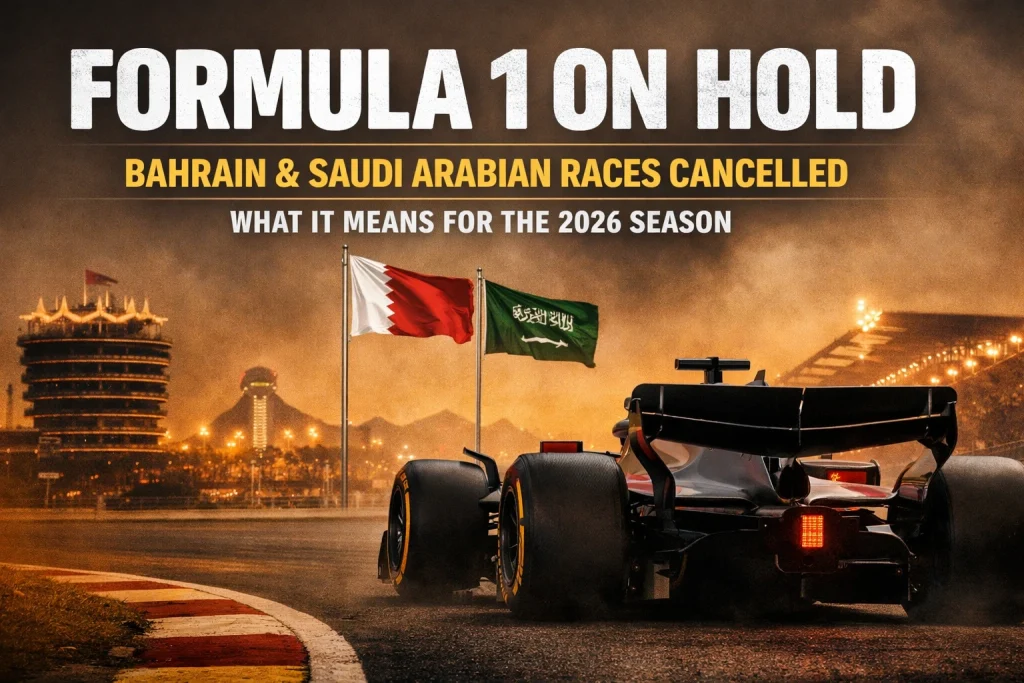
Formula 1 is no stranger to chaos, but even by its standards, April 2026 has thrown a curveball.
The sport has been forced into an unscheduled pause, with the planned rounds in Bahrain Grand Prix and Saudi Arabian Grand Prix unable to go ahead due to escalating instability in the Middle East. The result is a rare five-week gap between the Japanese Grand Prix and the next confirmed race, the Miami Grand Prix in early May.
While disruptions aren’t new in F1, a gap like this mid-season is highly unusual and could have a major impact on how the championship unfolds.
Why the Races Were Called Off
The cancellations stem from growing regional tensions and security concerns. This affects logistics, travel, and freight movement across key parts of the Gulf.
Formula 1 and the FIA ultimately made the call based on safety and operational viability. Moving thousands of tonnes of equipment across continents is already a massive undertaking. Add geopolitical instability into the mix, and it becomes near impossible.
Rather than postponing, the races have effectively been scrapped from the current calendar. Trimming the season down and forcing teams to reset their plans on the fly.
A Calendar Shake-Up
Losing two races at this stage of the season is significant.
F1 calendars are packed to the limit, and there’s very little flexibility to reschedule events later in the year. That means fewer opportunities for drivers to score points and a slightly compressed championship battle.
Financially, it’s also a blow both for race promoters and the sport itself but from a competitive standpoint. The bigger story is the unexpected breathing room it creates.
A Gift for Some, a Problem for Others
For teams still trying to get on top of the new 2026 regulations, this break might be perfectly timed.
Development is everything in modern F1, and an extra few weeks in the factory can make a serious difference. Teams now have a clear run-up to Miami to refine upgrades, fix weaknesses, and better understand their cars.
Outfits like Williams and Aston Martin who’ve been chasing performance will see this as a golden opportunity.
Even the big guns aren’t immune. Red Bull Racing, by their own high standards, haven’t had things all their own way early in the season, and this break gives them time to regroup.
The Title Fight: A New Name on Top
Three races in, and the 2026 season has already delivered a major storyline.
Kimi Antonelli has burst onto the scene and leads the championship early on, signalling a potential changing of the guard. Alongside him, George Russell has kept Mercedes-AMG Petronas Formula One Team firmly in the fight. Meanwhile, established names like Charles Leclerc and Lando Norris are keeping the pressure on, while Max Verstappen finds himself in the unusual position of playing catch-up.
It’s early days but the mix at the top suggests this could be one of the most open seasons in years.
What Happens Next?
All eyes now shift to Miami.
The Miami Grand Prix becomes more than just another race — it’s effectively a reset point for the season. Teams will arrive with upgrades, fresh data, and a clearer picture of where they stand.
Whoever gets it right in Miami could shape the direction of the championship from there.
Past the checkered flag
This wasn’t part of the plan but it might just define the season.
An unexpected break, a shaken-up calendar, and a tight early championship battle have set the stage for a fascinating 2026 campaign. In a sport where margins are everything, a few extra weeks could be the difference between fighting for wins and falling into the midfield.
Read more about 2026 Chinese Formula 1 race

Sibusiso loves all things sport and has been writing and living the game for the last ten years. Sibo can be found at his local when Liverpool or Pirates plays a match. He brings deep insights into upcoming football or rugby matches.